
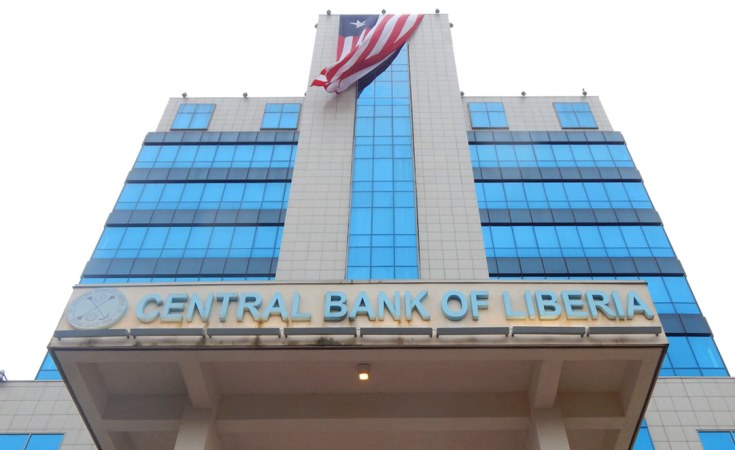
Strategic Engagement Framework
ABOUT THE CLUSTER
The Banking and Financial Sector Cluster is one of several strategic clusters established by the Council of Liberian Experts in the Diaspora (COLED), Inc. to advance its mission of mobilizing a network of competent, qualified, and service-oriented Liberian professionals in the diaspora who are committed to contributing to national development.
This Cluster brings together accomplished professionals from across the banking, finance, economics, insurance, regulatory, and academic sectors. Members possess deep expertise in:
- Economic management
- Fiscal and Monetary policy
- Financial systems
- Institutional governance
- Applied research
The Cluster includes seasoned practitioners from both the public and private sectors—some retired, others actively engaged—who have voluntarily committed to supporting Liberia’s socio-economic transformation.
Through this initiative, COLED seeks to harness, coordinate, and channel this wealth of expertise toward:
- Knowledge sharing
- Institutional strengthening
- Practical contributions to rebuilding and modernizing Liberia’s financial systems
KEY AREAS OF FOCUS
The Cluster will concentrate on a broad range of critical issues affecting Liberia’s financial architecture, including:
- Monetary Policy and Central Banking
- Financial Sector Regulation and Supervision
- Commercial Banking
- Rural Banking and Community-Based Finance
- Microfinance and Financial Inclusion
- Credit Unions and Cooperative Finance
- Insurance Services and Risk Management
- Mortgage and Housing Finance
- Deposit Insurance and Consumer Protection
- Collateral Security and Credit Risk Management
- Digital and Online Banking
- Credit and Debit Card Systems
- Automated Teller Machine (ATM) Infrastructure
- National Payment Systems and Financial Technology (FinTech)
- Capacity Building and Professional Training Opportunities
- Applied Research, Policy Analysis, and Institutional Advisory Support
OUR APPROACH
The Cluster adopts a collaborative, non-competitive, and solutions-driven approach in engaging Liberia’s public and private sector institutions.
Our goal is to identify knowledge, capacity, and service gaps within existing institutional and regulatory frameworks and, where appropriate, work with relevant stakeholders to address those gaps.
Engagement Mechanisms
- Strategic dialogue and technical consultations
- Development of Memoranda of Understanding (MOUs) with partner institutions
- Short- to medium-term expert placements or secondments
- Advisory support and technical assistance
- Capacity-building workshops, seminars, symposia, and webinars
- Policy-focused research and issue-based knowledge products
Through these mechanisms, the Cluster aims to:
- Strengthen institutional effectiveness
- Facilitate knowledge transfer
- Promote sustainable sectoral reforms
OUR VISION
Our vision is to contribute meaningfully to the development of a modern, resilient, inclusive, and well-regulated banking and financial sector in Liberia—one capable of:
- Supporting economic growth
- Protecting consumers
- Expanding access to finance
- Inspiring public confidence
Priority Policy Areas
The Cluster is particularly focused on supporting dialogue and reform around key strategic issues, including:
- Safeguarding the operational independence of the Central Bank of Liberia (CBL)
- Navigating the balance between dollarization and de-dollarization
- Promoting an appropriate mix of fiscal and monetary measures to contain inflation
- Expanding financial inclusion and encouraging innovation
- Strengthening regulatory and supervisory capacity
- Encouraging modernization across financial institutions
- Drawing lessons from past bank failures to improve systemic stability and risk governance
CALL TO ENGAGEMENT
We warmly welcome all interested professionals, stakeholders, and well-wishers to engage with the Banking and Financial Sector Cluster.
We encourage participation through:
- Constructive feedback
- Technical contributions
- Research collaboration
- Sharing of perspectives on current and emerging issues
For questions, suggestions, or to get involved, please contact Membership at membership.coledinc@gmail.com
Critical Issues:
- Monetary Policies (Central Bank)
- Micro-finance
- Commercial Banking
- Credit Unions
- Mortgage Companies
- Insurance Companies
- Appropriate Collateral
- Training Bankers
- Rural Banking
- Regulations and Supervision
- Online Banking
- ATM – Automatic Teller Machines
- Credit Cards
- Deposit Insurance
- Collateral Safety
Chairperson:

Christopher F. Konneh, Sr., MSc.
Chairman
Mr. Christopher F. Konneh, Sr.
Mr. Christopher F. Konneh, Sr. is an experienced economist and financial sector professional with a distinguished career spanning central banking, economic policy, public service, and international financial engagement. His work reflects a strong commitment to economic analysis, monetary policy development, and financial system stability in Liberia and beyond.
He holds a Master of Science (MSc) degree in Economics from the Lubin Graduate School of Business at Pace University in New York, where he graduated in 1982. He also earned a Bachelor of Science (BSc) in Economics from Cuttington University in Liberia in 1979.
Mr. Konneh spent sixteen years at the National Bank of Liberia (now the Central Bank of Liberia), where he held key roles in economic analysis and statistical research within the Department of Research and Economic Planning. Over the course of his tenure, he advanced from Research Assistant to Economist and ultimately to Manager of the Department.
As Manager, Mr. Konneh supervised a team of economists responsible for compiling and analyzing data across critical sectors of the Liberian economy, including money and banking statistics, balance of payments, national accounts, and public finance. Under his leadership, the department produced the National Bank of Liberia’s Quarterly Statistical Bulletins and Annual Reports. His work was grounded in a deep understanding of financial and economic policy, enabling him to collaborate with government institutions in analyzing and recommending macroeconomic policies, particularly in the area of monetary policy management.
In addition to his central banking responsibilities, Mr. Konneh was seconded to serve on the Economic and Financial Management Committee (EFMC), an inter-ministerial body based at the Ministry of Finance and Development Planning. In this role, he contributed to the formulation and recommendation of national macroeconomic policies for the Government of Liberia.
In 1992, Mr. Konneh was appointed Deputy Governor of the National Bank of Liberia by the Interim Government of National Unity. In this capacity, he served as principal assistant to the Governor and played a leading role in economic planning and financial policy management. His responsibilities included monitoring key economic indicators such as inflation and exchange rates, assessing the performance and stability of the banking sector, ensuring adherence to prudential financial practices, and supporting the development of a robust and efficient payment system aligned with international standards.
Mr. Konneh represented the National Bank of Liberia in numerous international, regional, and sub-regional financial and economic forums. These included engagements with the West African Clearing House (now the West African Monetary Agency), the Economic Community of West African States (ECOWAS), the Association of African Central Banks (AACB), as well as participation in Annual Meetings of the International Monetary Fund (IMF) and the World Bank, and engagements with the African Development Bank (AfDB).
Following his banking career, Mr. Konneh served the State of New Jersey as a Family Service Specialist for nearly twenty years. He is currently retired but remains actively engaged in following global financial and economic developments.
Mr. Konneh is widely read and maintains a strong interest in contemporary economic and financial trends. He regularly follows publications from the International Monetary Fund, World Bank, Global Finance, and the Federal Reserve System, as well as regional African economic periodicals and Liberian newspapers.
Key Policy Challenges for the Monetary Authority (Central Bank of Liberia)
1. Preserving the Operational Independence of the CBL
The Government of Liberia (GOL) has sole ownership of the CBL. A review of the Acts that established the Central Bank of Liberia (1999) and its predecessor, the National Bank of Liberia (1974), clearly indicates that both were granted functional independence to conduct monetary policy.
However, during periods of poor fiscal performance, past administrations often failed to exercise this independence effectively. Instead, the Central Bank/NBL prioritized credit allocation to the government, leading to persistent deficit financing and a crowding-out effect. Printing banknotes and using commercial banks’ reserves to cover fiscal deficits became frequent practices. These measures did not serve any constructive monetary policy objective.
While quantitative easing and credit expansion are typically used to support growth, in Liberia such practices became harmful to economic stability. For the CBL to be effective, the government’s overbearing influence on monetary operations must be curtailed or minimized.
2. De-dollarization vs. Dollarization
Liberia currently operates a dual currency system, where both the Liberian dollar (LD) and the United States dollar (USD) are legal tender. By law, prices for all transactions should be denominated in Liberian dollars. However, in practice, payments are widely accepted in U.S. dollars.
A thriving parallel market exists, creating exchange rate disparities between the two currencies. For example, as reported on the CBL website, the average exchange rate on January 27, 2024, was L$189.80 = US$1.00. Movements in the exchange rate reflect imbalances between the demand for and supply of foreign currency, with serious implications for the balance of payments.
The effectiveness of conducting monetary policy under this dual arrangement must be carefully assessed. Determining whether to maintain dollarization or pursue de-dollarization is critical, as each path carries risks of policy distortion. In this regard, COLED could use its expertise to recommend the most appropriate currency regime, along with the necessary monetary and fiscal adjustments to implement it successfully.
3. Taming Inflationary Pressures
High inflation erodes consumers’ purchasing power. In Liberia, inflationary pressures stem primarily from exchange rate fluctuations and external shocks such as supply chain disruptions and global market developments. Exchange rate volatility typically arises from an imbalance between the demand for and supply of foreign currency for trade and services, pointing to a balance of payments (BOP) challenge.
To minimize inflationary pressures, two strategies stand out:
- Boost foreign currency earnings (e.g., through exports and remittances)
- Reduce imports while increasing domestic production
Where sufficient foreign exchange is available, sterilization policies—reducing excess domestic currency in circulation—can also help stabilize prices. Another option is to adjust the composition of financial assets in the economy to absorb excess liquidity.
4. Promoting and Incentivizing Financial Inclusion and Deepening
Liberia’s financial markets remain shallow, with limited products and no secondary markets for trading financial derivatives. To strengthen the sector, the CBL must lead efforts to:
- Innovate and diversify financial products
- Develop secondary markets for financial instruments
- Broaden financial access in underserved areas
In many developing countries, microfinance institutions—especially in rural regions—play a key role in expanding services to unbanked populations. This strategy enhances financial inclusion, mobilizes domestic resources, and supports economic growth.
COLED can contribute by conducting research on how Liberia’s financial markets can be deepened and diversified, thereby increasing the range of services available to households, businesses, and investors.
1. Lessons from Past Bank Failures
A series of bank failures between the 1980s and 2000 shook the foundation of Liberia’s banking system. The sector’s resilience was severely weakened after the military takeover in 1980. Contributing factors included capital inadequacy, poor management structures, and weak supervision. Specialized banks created to provide credit for housing and agriculture also collapsed due to ineffective oversight.
The responsibility for ensuring financial stability and risk mitigation rests with the Central Bank of Liberia (CBL). To fulfill this role, the CBL must strengthen its regulatory and supervisory capacity. A robust risk-mitigation framework should be developed alongside clear legal and regulatory regimes to guard against insolvency, such as establishing a deposit insurance institution. Guidance from the Basel Committee on Banking Supervision (Basel I, II & III) will be valuable in this process.
Consideration should also be given to recapitalizing the defunct National Housing and Savings Bank (NHSB) and the Agricultural and Cooperative Development Bank (ACDB)—though this would require significant resources. COLED can explore options for safeguarding financial sector assets in the event of a crisis, as well as the feasibility of recapitalizing these institutions.
2. Encouraging Banks to Modernize Practices
Financial technology (FinTech) has become a key driver of banking innovation in the 21st century, and its importance cannot be overstated. Many banks are transitioning away from traditional practices—such as long in-person lines for deposits and withdrawals—toward online and digital banking.
In emerging and low-income countries, mobile banking is bridging the gap between formal and informal economies. Payments and credit services are increasingly facilitated through mobile money platforms. In addition, central banks worldwide are exploring Central Bank Digital Currency (CBDC) for domestic and international transactions.
These platforms must be carefully assessed for both their potential benefits and the risks associated with their use.
3. Addressing Bank Non-Profitability
Both banks and non-bank financial institutions in Liberia face significant constraints that limit profitability. Challenges include:
- High levels of non-performing loans (NPLs)
- Inconsistent electricity supply, forcing reliance on costly private generators
- Other structural and operational inefficiencies
To reduce financial losses, robust debt resolution mechanisms must be established. Developing a credit reference system to prevent chronic defaulters from repeatedly accessing credit would be a strong first step. COLED could further investigate how such a system could be created and managed with proper safeguards.
1. Insurance Companies
The Act authorizing the creation of insurance companies in Liberia was first passed in 1973. At that time, it was unclear whether these companies operated under a regulatory or supervisory framework. With the creation of the Central Bank of Liberia (CBL) through an amended Act in 1999, oversight responsibilities for insurance companies were formally transferred to the CBL.
However, it was not until 2013 that an Act was passed establishing a comprehensive regulatory and supervisory framework to guide the operations of insurance companies in Liberia. Since then, several amendments to the insurance laws have been enacted to address governance, premium payment compliance, and management structure issues.
The operations of the National Insurance Company of Liberia (NICOL) and the National Social Security and Welfare Corporation (NASSCORP) have continued to undergo review. Notably, the Act that created NICOL granted it the sole and exclusive right to insure all government businesses. Meanwhile, the solvency of NASSCORP has remained questionable, as highlighted by a 2015 World Bank study. A thorough review of these institutions’ operations is necessary to determine their viability.
2. Establishing an Institute for Banking Studies and Economic Analysis
If not already in existence, such an institute could serve as a dedicated training ground to promote best practices in banking, finance, and economic analysis. This would enhance the capacity and resilience of Liberia’s financial sector.
COLED has the expertise to develop a standardized curriculum and deliver the requisite instruction to strengthen the skills base of banking and financial professionals.