

CHAIR’S MESSAGE: THE PRIVATE SECTOR CLUSTER
The Private Sector Cluster is one of several strategic clusters established by the Council of Liberian Experts in the Diaspora (COLED), Inc. to advance its mission of mobilizing a
network of competent, qualified, and service-oriented Liberian professionals in the diaspora who are committed to contributing to national development. This cluster will provide access to financial resources & inclusion for underserved communities in Liberia with a deep history of economic disparity, especially Women and Youth to create self-employment opportunities.
Mission Statement
To mobilize diaspora and domestic capital to expand access to financial services, housing finance, business financing, agricultural development, and investment opportunities that empower women & youth, strengthen communities, and contribute to Liberia’s long-term economic development.
The Financial GAP & Problem in Liberia
SME Financing Gap
Small and medium-sized enterprises (SMEs) are the backbone of Liberia’s private sector, yet they remain dramatically underfinanced. The World Bank Enterprise Survey (2025) found that approximately 40% of Liberian firms identify access to finance as their single greatest obstacle to growth. Formal SME lending is constrained by high lending rates, stringent collateral
requirements, and limited availability of products tailored to the risk profiles of early-stage or growth-stage Liberian businesses.
Agricultural Financing Gap
Agriculture employs over 70% of Liberia’s rural population yet receives a disproportionately small share of formal credit. Smallholder farmers lack access to seasonal production financing, equipment finance, or post-harvest value chain credit. Agricultural productivity is constrained by limited capitalization, rudimentary input, and limited connectivity to formal markets. The Private Sector cluster will develop dedicated agricultural lending products to address this critical gap.
Women’s Economic Participation
Liberian women represent the majority of informal sector participants, smallholder farmers, and micro- entrepreneurs, yet they face disproportionate barriers to accessing formal financial services, business credit, and housing finance. Women-owned businesses are systematically undercapitalized. Female farmers lack access to agricultural lending. Women entrepreneurs cannot access the financing necessary to formalize and grow their enterprises. Addressing these structural gaps is a central pillar of the Private Sector Cluster
mission.
Diaspora Remittance Market
Liberia is among the most remittance-dependent economies in Sub-Saharan Africa. Annual diaspora remittances are estimated at US$500 million to US$800 million (World Bank), representing a considerable proportion of GDP. The Liberian diaspora — concentrated in the United States, the United Kingdom, Ghana, and Ivory Coast — maintains deep economic and emotional ties to Liberia. Yet despite the scale of these flows, the vast majority of remittances support household consumption rather than productive investment. No regulated, transparent, member-owned vehicle has existed to channel diaspora capital into savings, housing, SME lending, or community development. The Private Sector Cluster is designed to fill this gap.
The Private Sector Cluster mission is to close the wealth gap and create opportunities for individuals who have been historically excluded from traditional banking. Our vision transcends financial services, it is about empowering communities, fostering equity, and inspiring generational change. By breaking down barriers to financial access, creating initiative to open doors to entrepreneurship, homeownership, and financial literacy, leaving a legacy of opportunity and inclusivity for now & the future.
This Private Sector Cluster brings together accomplished professionals from across the private sector, banking, finance, community economic development, business development, entrepreneurial development, women-and youth development and financial services to unbanked, disadvantaged, and disinvested population. Members possess deep expertise in:
• Community Economic Development
• Fiscal and Monetary policy
• Financial systems
• Institutional governance
• Banking & Financial Services
• Business & Entrepreneurial Development Services
• Capacity Building & Technical Assistance
• Women and Youth Lending Services to Small & Medium-sized Businesses in all counties
• Access to Digital and Online Financial Services
The Private Sector Cluster brings together Liberian experts and professionals across the diaspora to support the Government of Liberia in implementing the Private Sector and Financial Services Agenda.
The Cluster includes seasoned private-sector practitioners—some are retired and others actively engaged—who have voluntarily committed to supporting Liberia’s socio-economic transformation. Working in partnership with the Ministry of Commerce, Ministry of Planning & Development, Central Bank, Ministry of Agriculture, National Investment Commission, and all national stakeholders, the Cluster provides:
• Technical expertise
• Policy guidance
• Research support
• Capacity-building assistance
• Financial Services to the underserved and disadvantaged population.
Through this initiative, COLED seeks to harness, coordinate, and channel this wealth of expertise toward:
• Knowledge sharing
• Institutional strengthening
• Practical contributions to rebuilding and modernizing Liberia’s financial systems for ALL.
KEY AREAS OF FOCUS
The Cluster will concentrate on a broad range of critical issues affecting Liberia’s financial architecture and system, including:
• Community Development Financial Institutions (CDFIs)
• Agriculture and Agribusiness Financing
• Rural Banking and Community-Based Finance
• Microfinance and Financial Inclusion
• Community Credit Unions and Cooperative Finance
• Mortgage and Housing Finance
• Digital and Online Banking
• Credit and Debit Card Systems
• Capacity Building and Professional Training Opportunities
OUR APPROACH
The Cluster adopts a collaborative, non-competitive, and solutions-driven approach in engaging Liberia’s private sector institutions and individuals. Our goal is to identify knowledge, capacity, and service gaps within existing institutional and regulatory frameworks and, where appropriate, work with relevant stakeholders to address those gaps by targeting the unbanked, underserved population in Liberia.
Engagement Mechanisms
• Strategic dialogue and technical consultations
• Development of Memoranda of Understanding (MOUs) with partner institutions
• Advisory support and technical assistance
• Capacity-building workshops, seminars, symposia, and webinars
• Policy-focused research and issue-based knowledge products
Through these mechanisms, the Cluster aims to:
• Strengthening institutional effectiveness
• Facilitate knowledge transfer to the unserved population.
• Promote sustainable sectoral reforms.
OUR VISION
Our vision is to contribute meaningfully to the development of a modern, resilient, inclusive, and well-regulated banking and financial sector in Liberia—one capable of:
• Supporting economic growth for all
• Protecting underserved and disinvested entrepreneurs and consumers
• Expanding access to finance to Liberians every where
• Inspiring private sector confidence in the Diaspora and in Liberia
Priority Policy Areas
The Cluster is particularly focused on supporting dialogue and reform around key strategic issues, including:
• Safeguarding the operational independence of the Central Bank of Liberia (CBL)
• Expanding financial inclusion and encouraging innovation
• Strengthening regulatory and supervisory capacity
• Encouraging modernization across financial institutions
• Drawing lessons from past bank failures to improve systemic stability and risk governance
CALL to ENGAGE
We warmly welcome all interested professionals, stakeholders, and well-wishers to engage with the Private Sector Cluster. We encourage participation through:
• Constructive feedback
• Technical contributions
• Research collaboration
• Sharing of perspectives on current and emerging issues
Critical Issues:
• Micro-finance & SME Lending
• Commercial Banking
• Community Credit Unions
• Mortgage Companies
• Training Banking Staff to be more sensitive to customers’ needs.
• Rural Banking
• Digital and Online Banking
• ATM – Automatic Teller Machines
• Credit Cards
• Deposit Insurance
Chairperson:
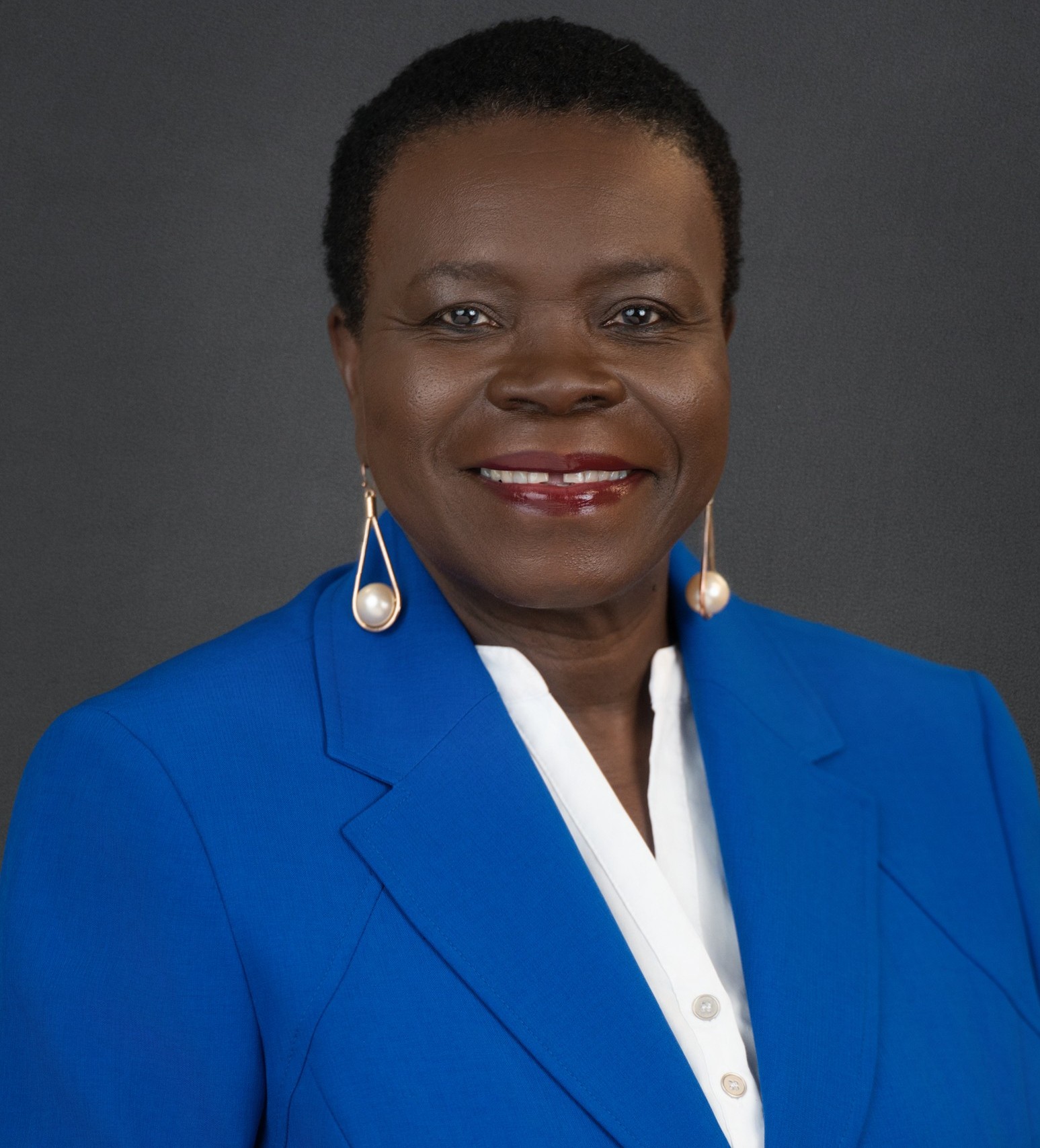
Watchen Harris Bruce, M.Ed.
Cluster Chair
Watchen Harris Bruce, M.Ed.
Mrs. Watchen Harris Bruce is a senior financial management and international development executive with more than 40 years of experience spanning banking, community development finance, economic development, agribusiness, affordable housing, consumer and mortgage finance, small business banking, investment facilitation, and private sector development. She has spent more than two decades working in community and international development, leading complex initiatives across the United States and Africa.
Throughout her career, Mrs. Bruce has specialized in inclusive economic growth, finance services, governance, human capacity building, proposal development, strategic planning, financial analysis, loan syndication, investment fund management, and project lifecycle management. She has extensive experience working with governments, donors, financial institutions, community organizations, civil society, and private sector stakeholders to expand access to finance and strengthen economic opportunity.
Mrs. Bruce served seven years managing USAID Economic Growth and Development projects in Africa. As Chief of Party and Deputy Chief of Party, she led multimillion-dollar initiatives that expanded access to finance for Micro, Small, and Medium Enterprises (MSMEs), managed co-investment and guarantee funds, strengthened financial institutions, supported agribusiness value chains, and successfully exceeded project performance targets. Her work resulted in millions of dollars in financing being mobilized for businesses while strengthening entrepreneurship and institutional capacity.
She currently serves as President and Chief Executive Officer of Baltimore Community Lending, Baltimore’s only local Community Development Financial Institution (CDFI). In this role, she provides executive leadership for organizational strategy, governance, capital raising, lending operations, community relations, and organizational growth. Under her leadership, organizational assets increased from $20 million in 2020 to $46 million in 2023.
Earlier in her career, Mrs. Bruce held leadership positions with PNC Bank, NeighborWorks America, JP Morgan Chase, Fleet Bank (now Bank of America), the Federal Home Loan Bank, the City of Boston Department of Neighborhood Development, Resolution Trust Corporation, Bank of New England, and Chase Bank. Her experience spans commercial banking, community development finance, mortgage lending, real estate development, federal grant management, technical assistance, and economic development.
Mrs. Bruce has testified before the U.S. Senate Banking, Finance & Urban Committee and has been recognized as one of Baltimore’s Top 100 Women Leaders by The Daily Record. She is a Certified Women Business Banker and Advisor through PNC Bank and has completed executive leadership programs through Harvard Kennedy School, NeighborWorks America, Wells Fargo Leadership Academy, and other nationally recognized institutions.
A committed community leader, Mrs. Bruce co-founded B’More Clubhouse, a Baltimore-based mental health organization, founded Harris Economic Development Corporation to support African women-owned businesses, and serves or has served on numerous nonprofit and advisory boards, including the African American Alliance of CDFI CEOs, the Maryland Community Development Network, Kennedy Krieger Institute, Morning Star Baptist Church CDC Boards, and the Consumer Financial Protection Bureau Advisory Board.
Mrs. Bruce completed all doctoral coursework for the Doctor of Education in Organizational Development and Leadership at Grand Canyon University, with the dissertation remaining. She also holds a Master of Education in Business Management from Cambridge College, a Bachelor of Arts in Community Planning and Management from the University of Massachusetts Boston, and a Bachelor of Arts in French from the University of Abidjan, Ivory Coast.